Cheapest Medical Aid in South Africa: How to Pay Less Without Losing Cover
The cheapest medical aid is not one product. Here are the lowest-cost ways to get cover, the trade-offs, and how to pay less without leaving yourself exposed.
 By Hellopeter Editorial Team
Cheapest Medical Aid in South Africa: How to Pay Less Without Losing Cover
Looking for the cheapest medical aid in South Africa is sensible, medical cover is expensive, and nobody wants to pay for benefits they never use. But "cheapest" is the wrong question on its own, because the cheapest cover that leaves you exposed when something serious happens is no bargain at all. The better question is: what's the cheapest option that still protects you? This guide lays out the lowest-cost routes, the trade-offs of each, and how to pay less without losing the cover you actually need.
What "cheapest" actually means
There's no single cheapest medical aid, because the lowest-cost route depends on what you're willing to give up. In rough order from cheapest up:
- An entry-level hospital plan. A hospital plan is the cheapest *real* medical aid: it covers in-hospital costs and the regulated Prescribed Minimum Benefits, but not day-to-day GP or dentist visits. For young, healthy people, this is usually the best value. See our hospital plan guide for the detail.
- A network or efficiency plan. Many schemes offer cheaper versions of a plan that lower the premium in exchange for using a fixed network of hospitals and doctors. Good value if the network covers your area.
- A low-cost scheme option. Entry options on the bigger schemes trade a lower premium for tighter benefits and more sub-limits.
- Health insurance (not medical aid). The cheapest "health cover" of all, but it's an insurance product, not medical aid, and it won't cover a large hospital bill (more on that below).
The cheapest ways to get cover, compared
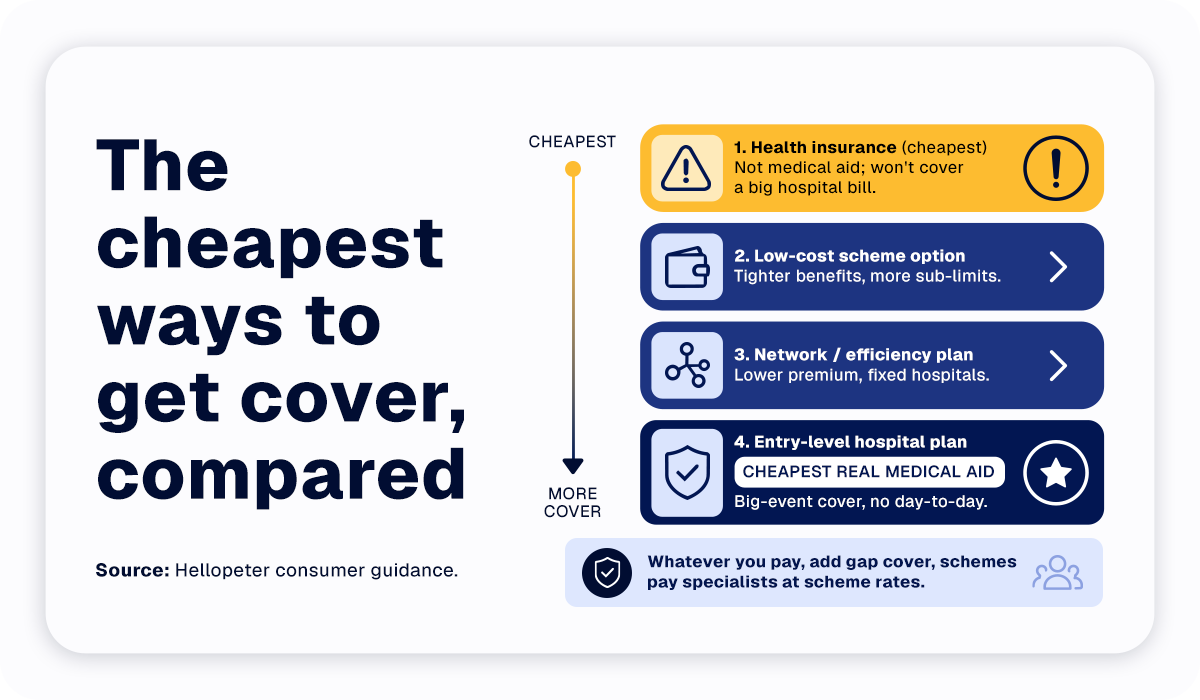
| Option | Best for | The trade-off |
|---|---|---|
| Entry-level hospital plan | Young, healthy, want big-event cover | No day-to-day cover (GP, dentist) |
| Network / efficiency plan | Lower premium, fixed area | Must use the scheme's network of hospitals and doctors |
| Low-cost scheme option | Tight budget, basic needs | Tighter benefits and more sub-limits |
| Health insurance | Cannot afford a registered scheme | Not medical aid; caps; won't cover a big hospital bill |
Source: Hellopeter consumer guidance (general; compare current plans with a broker) — June 2026
The trap: cheap cover that leaves you exposed
The danger with chasing the lowest premium is discovering the gaps at the worst possible time. Watch for:
- Network restrictions. A cheaper plan may only pay in full at specific hospitals. Go elsewhere and you face large co-payments.
- Co-payments and sub-limits. Low-cost options often have co-payments on scans and procedures, and annual limits that run out mid-year.
- Health insurance isn't medical aid. It typically pays a fixed daily cash amount in hospital, not the actual bill, so a major admission can still leave you with a huge shortfall. It can suit someone who genuinely can't afford a scheme, but it's not a substitute.
- The specialist shortfall. Even a real medical aid pays in-hospital costs at scheme rates, and specialists often charge several times more. Gap cover bridges that, and it's affordable, so budget for it (see the hospital plan guide).
Who should, and should not, go for the cheapest option
The cheapest plan is the right call for some people and a costly mistake for others. A young, healthy single person with no chronic conditions is exactly who an entry-level hospital plan suits: they're unlikely to need day-to-day cover, and the big-event protection is what matters. A family with children, or anyone managing a chronic condition, should be more careful, the savings from a bare-bones plan can vanish the first time you hit a sub-limit or a co-payment. And if you're older or use healthcare regularly, the cheapest option is often a false economy: you end up paying out of pocket for what a slightly better plan would have covered. Match the price to your actual risk, not just your budget.
How to get the cheapest cover that still protects you
Work it in this order:
- Match the tier to your life. Young and healthy with no chronic conditions? An entry-level hospital plan is usually the cheapest sensible cover. A family with ongoing needs may need more.
- Consider a network or efficiency plan if the network covers the hospitals near you, that's often the biggest saving for the smallest real loss.
- Check the PMB and chronic cover against your own conditions, even the cheapest registered scheme must cover the PMBs by law.
- Add gap cover rather than buying up to a pricier plan, it's often the cheaper way to close the biggest risk.
- Get quotes through an accredited broker. Broker advice is free to you, and a good one will find the cheapest plan that actually fits, across schemes.
If a claim is wrongly rejected
A cheap plan doesn't mean fewer rights. If a claim or authorisation is unfairly declined, dispute it with the scheme in writing and ask for the rule they're relying on, then escalate to the Council for Medical Schemes (CMS), the regulator, which handles member complaints. Putting your experience on the public record on Hellopeter helps too. For the full approach, see our guide on how to complain effectively.
A Note on This Article
Hellopeter is independent and impartial. We aren't affiliated with the schemes mentioned, and nothing here's sponsored. Everything below is based on public, verified customer reviews on Hellopeter, which change as new reviews come in, so the figures reflect the picture at the time of publication. This is general information to help you compare, not financial advice, so do your own research before you decide.
Frequently asked questions
- What Is the Cheapest Medical Aid in South Africa?
- There's no single answer, the cheapest real medical aid is usually an entry-level hospital plan, and network or efficiency plans lower the premium further by restricting your hospitals or benefits. The cheapest option for you depends on your health needs; get quotes through a broker.
- Is "affordable Medical Aid" the Same as Cheap?
- Affordable should mean the lowest premium that still covers what you actually need, not simply the cheapest number. A plan that doesn't cover your real risks isn't affordable, it's a false economy.
- What Is the Cheapest Way to Be Covered for Hospital?
- An entry-level hospital plan, ideally paired with gap cover for the specialist shortfall. That combination protects you against the big bills for far less than comprehensive cover.
- Is Health Insurance Cheaper Than Medical Aid?
- Yes, but it's not medical aid. It usually pays a fixed cash amount per day in hospital, not the actual bill, so it won't cover a large hospital admission. Treat it as a last resort or a top-up, not a replacement.
- Do Cheap Plans Still Cover Prescribed Minimum Benefits?
- Yes. By law every registered scheme option, no matter how basic, must cover the PMBs, a regulated set of conditions and emergencies.